
Maine Italian Sandwich (The Real Original Italian)


This post may contain affiliate links, see my disclosure policy for details.
If you grew up in Maine, “an Italian” from Amato’s is a sandwich you don’t have to explain. Everyone already knows: soft bread, boiled ham, sour pickles, and a pile of fresh veg, wrapped tight in paper and eaten at the beach, a picnic, or on the floor of your brand new apartment.
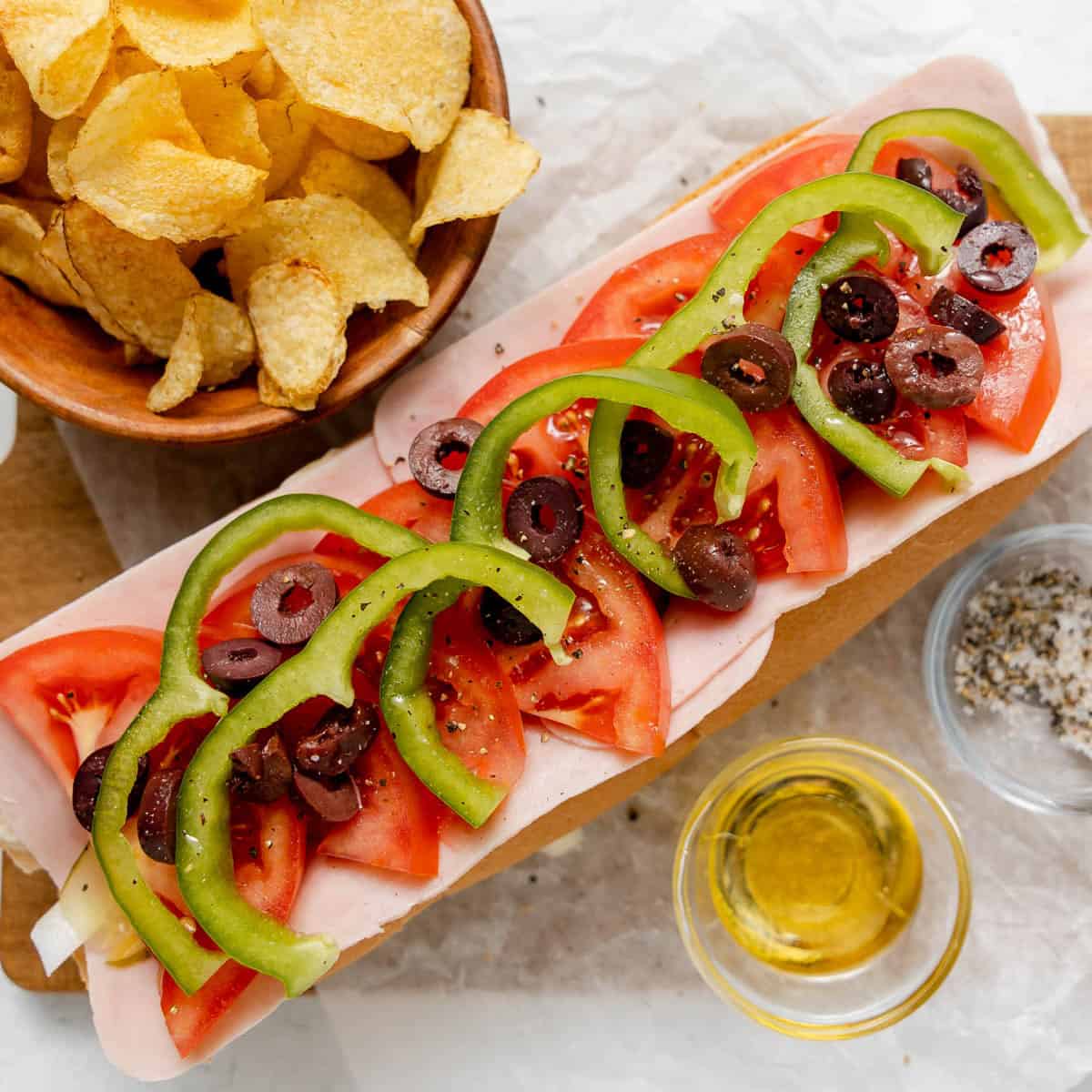
The Maine Italian is not to be confused with subs from Jersey Mike’s or the subs you find further south in New York or New Jersey. There’s no lettuce, only two big slices of ham, piled high with sliced veggies and a simple sprinkle of salt, pepper and oil. That’s all there is to it. Let me show you how they come together, and why each ingredient is what it is.
The Original, Since 1902
More than 100 years later, Amato’s still calls itself the home of the real Italian, and honestly, they’ve earned it!
Back in 1902, a young Italian immigrant from Naples named Giovanni Amato started selling these sandwiches to dockworkers on the fishing docks of Portland. They were affordable and the workers loved them.
Giovanni and his wife Michelina opened their first shop on India Street in Portland, (which is my favorite location and the one I grew up going to). In the ’70’s Dominic Reali added the greek olives, sour pickles, and the Italian sandwich’s signature oil blend. And that’s how it’s still made today (like literally, I just got an Amato’s Italian last week).
What You Need
The Maine Italian is all about specific ingredients. Here’s what goes on the sandwich and why it matters:
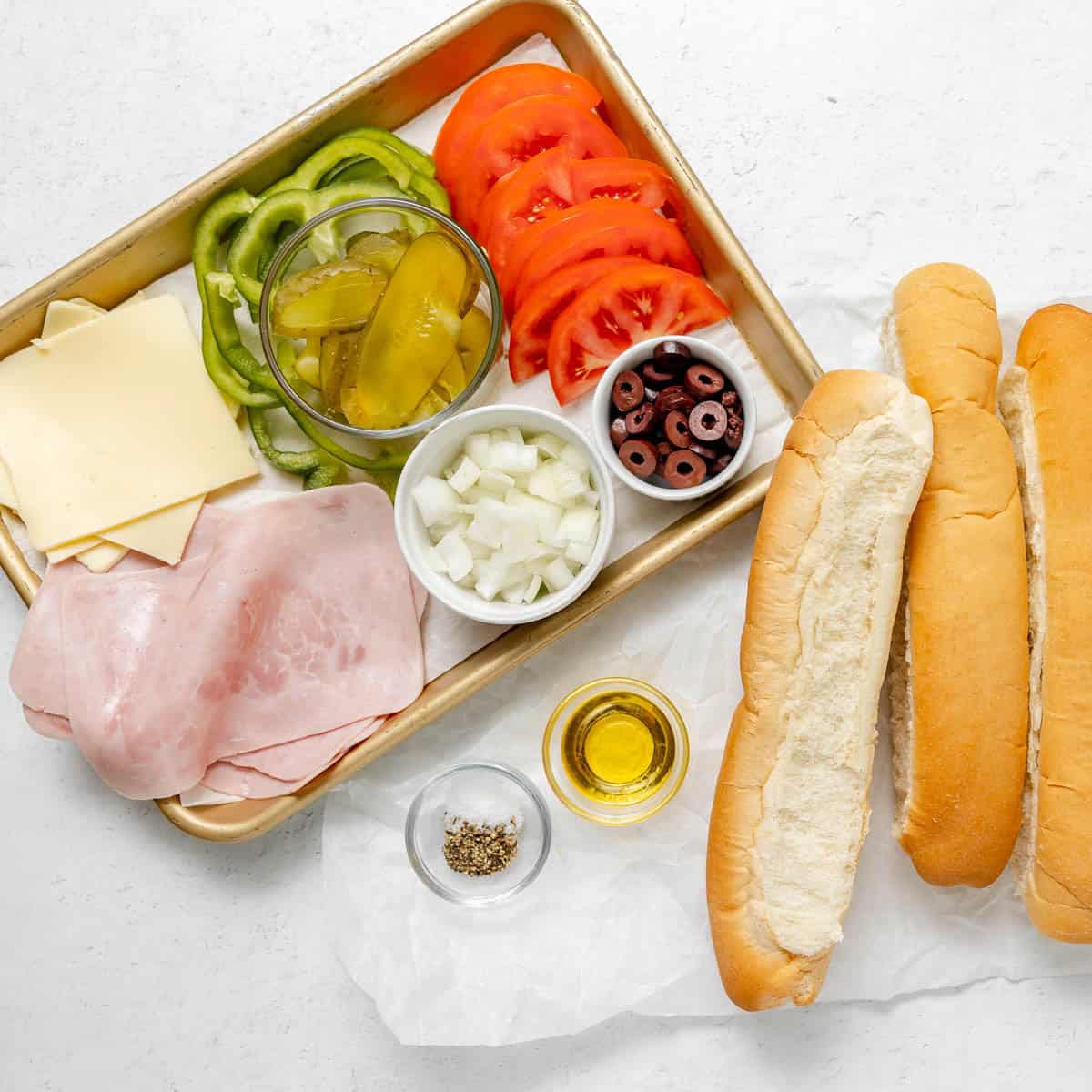
- The roll- A soft bakery sub roll, the pillowy kind, not crusty. Amato’s bakes their own, but if you can’t get those, a bakery sub roll is what you’re after. A crusty baguette or a chewy roll won’t work here.
- Boiled ham- Not smoked, not honey or glazed ham, not Black Forest. Mild, soft boiled ham or a “Polish Ham” is the classic. It’s usually the ham in big rectangular slices at the deli.
- Sliced cheese- White American cheese is the traditional choice. I don’t eat American cheese myself, so I go with provolone or Swiss when I want cheese on mine.
- White onion- Diced.
- Sour pickles- And they should be sour or very zesty. The pucker is a big part of what makes an Italian taste like an Italian. Slice them thin, on the bias.
- Green bell pepper- Sliced thin into rings first and then cut in half to make strips.
- Greek olives- Sliced thin, and they need to be pitted Greek (Kalamata) olives, not canned black olives.
- Tomato- Sliced thin into half moons, so they layer neatly and don’t slide out (as much).
- Salt, pepper, and oil- That’s the whole dressing. No vinegar, no mayo, no Italian dressing. For the oil you want a light olive oil, a vegetable oil, or a blend of the two.
A quick note on amounts on the recipe card: The amounts in this recipe are what you get on a standard Maine Italian, so treat it as your base and adjust everything to what looks good to you.
How To Build The Maine Italian Sandwich
Step 1:
Slice the roll from the top, about three quarters of the way down, without cutting all the way through. You want a flat, solid bottom with a hinge, not two separate halves.
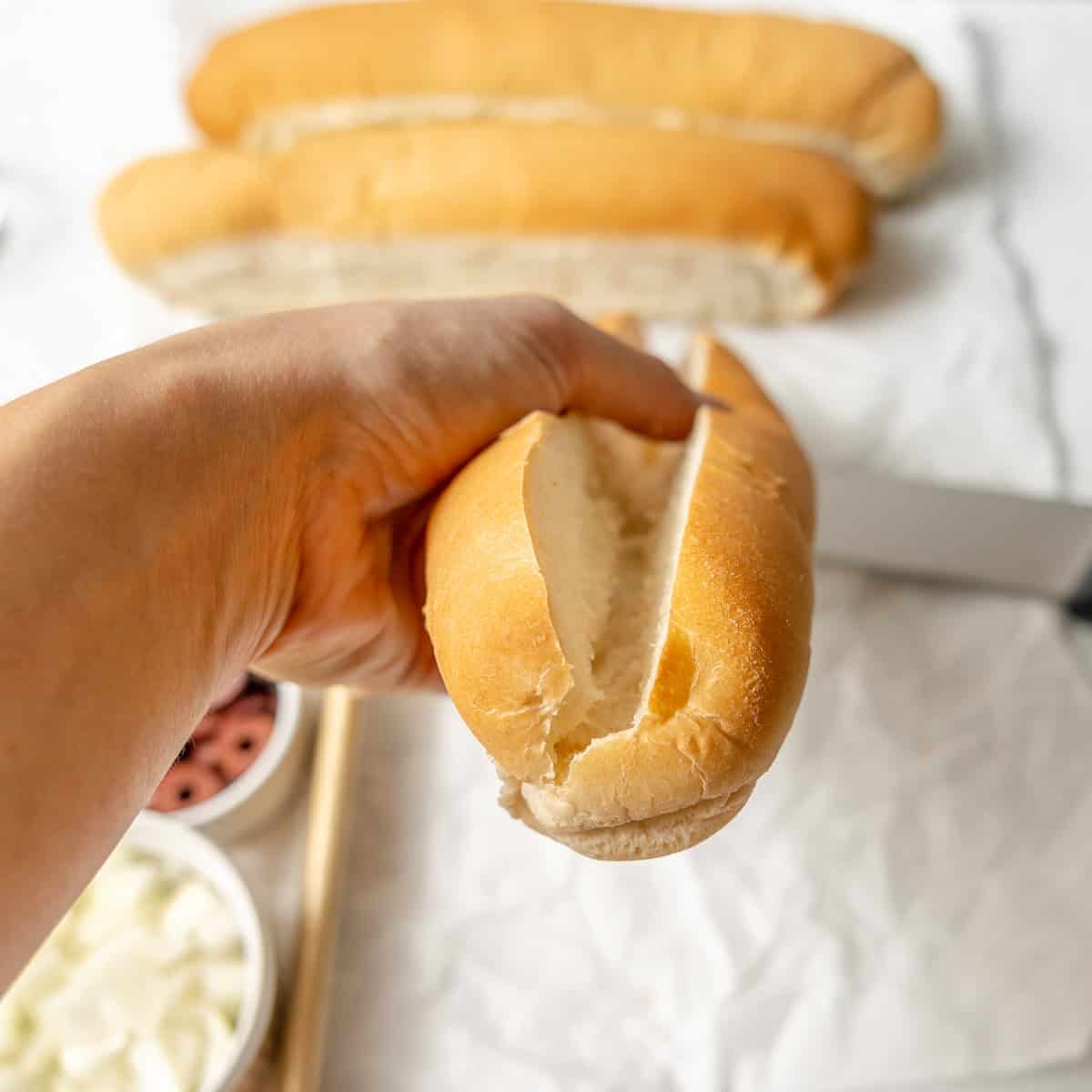
Note: Some people scoop out the inside of the roll to make more room. I don’t, and after eating dozens of these at Amato’s, I can tell you they don’t either.
Step 2:
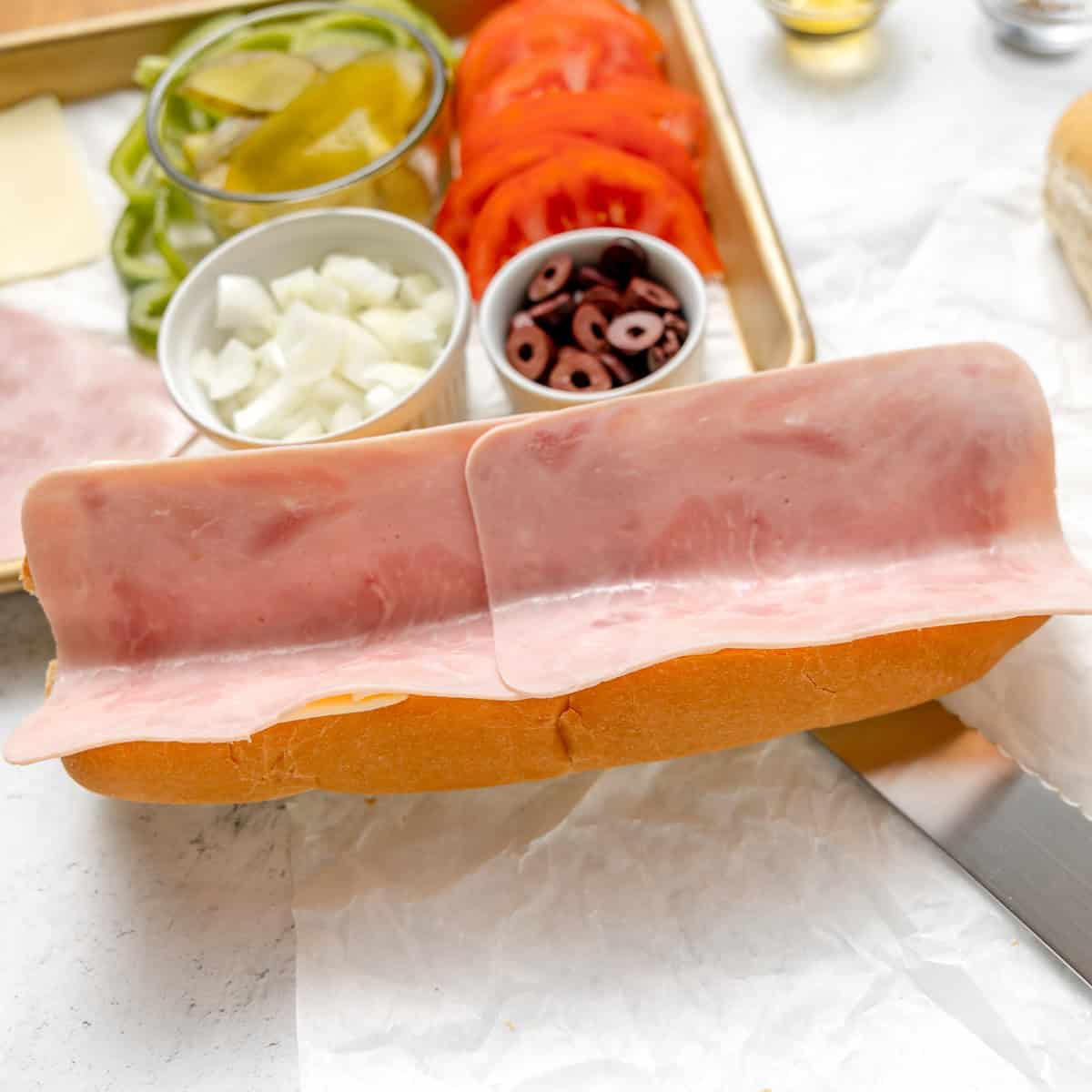
Start with the cheese, layer right against the bread.
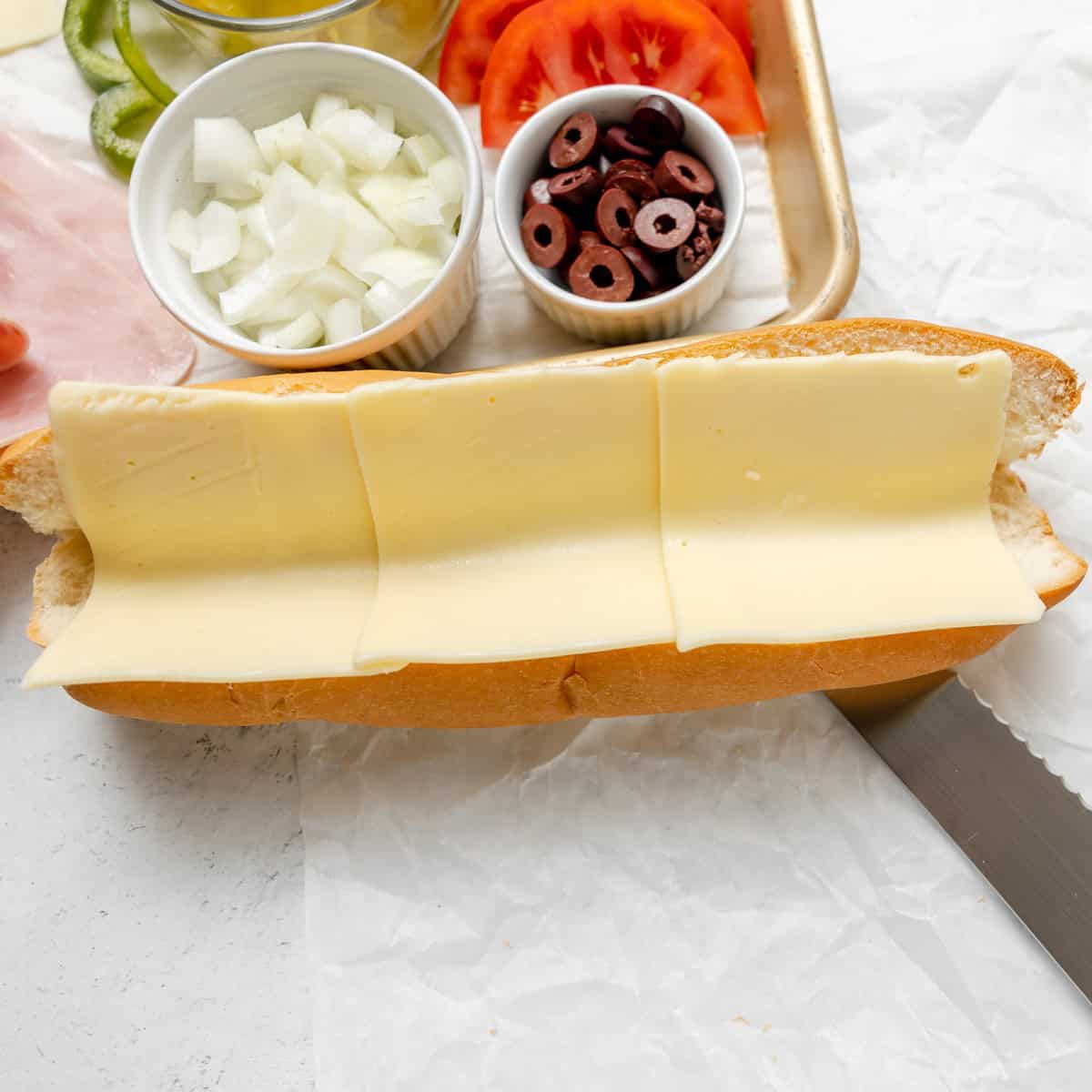
Then the ham on top of that. Together, the cheese and ham act as a moisture barrier between the bread and the juicier ingredients on top, like the tomato and pickles. It keeps the untoasted roll from turning soggy.
Step 3:
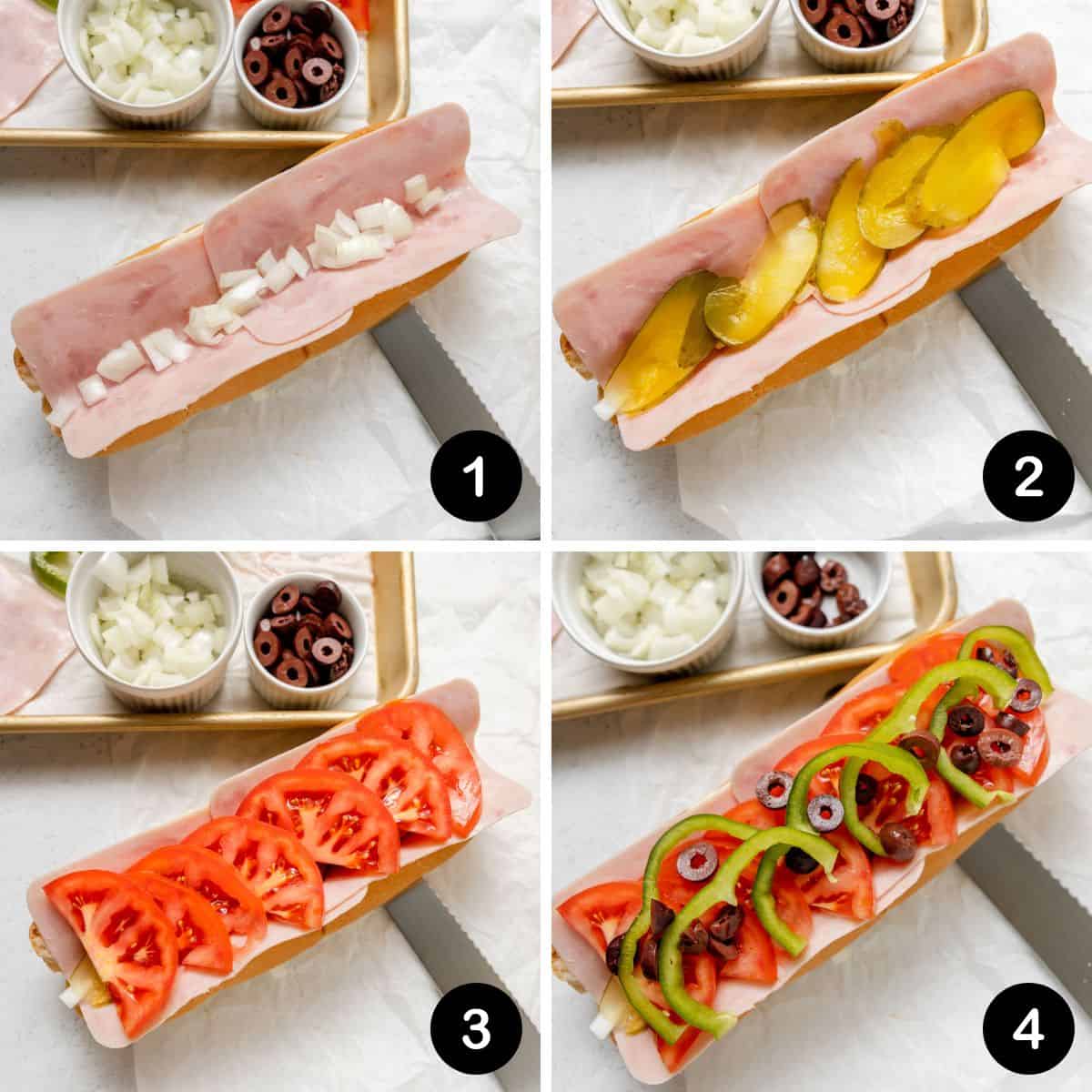
Next comes the onion, pickles, tomatoes, green peppers, and Greek olives, in that order.
Step 4:
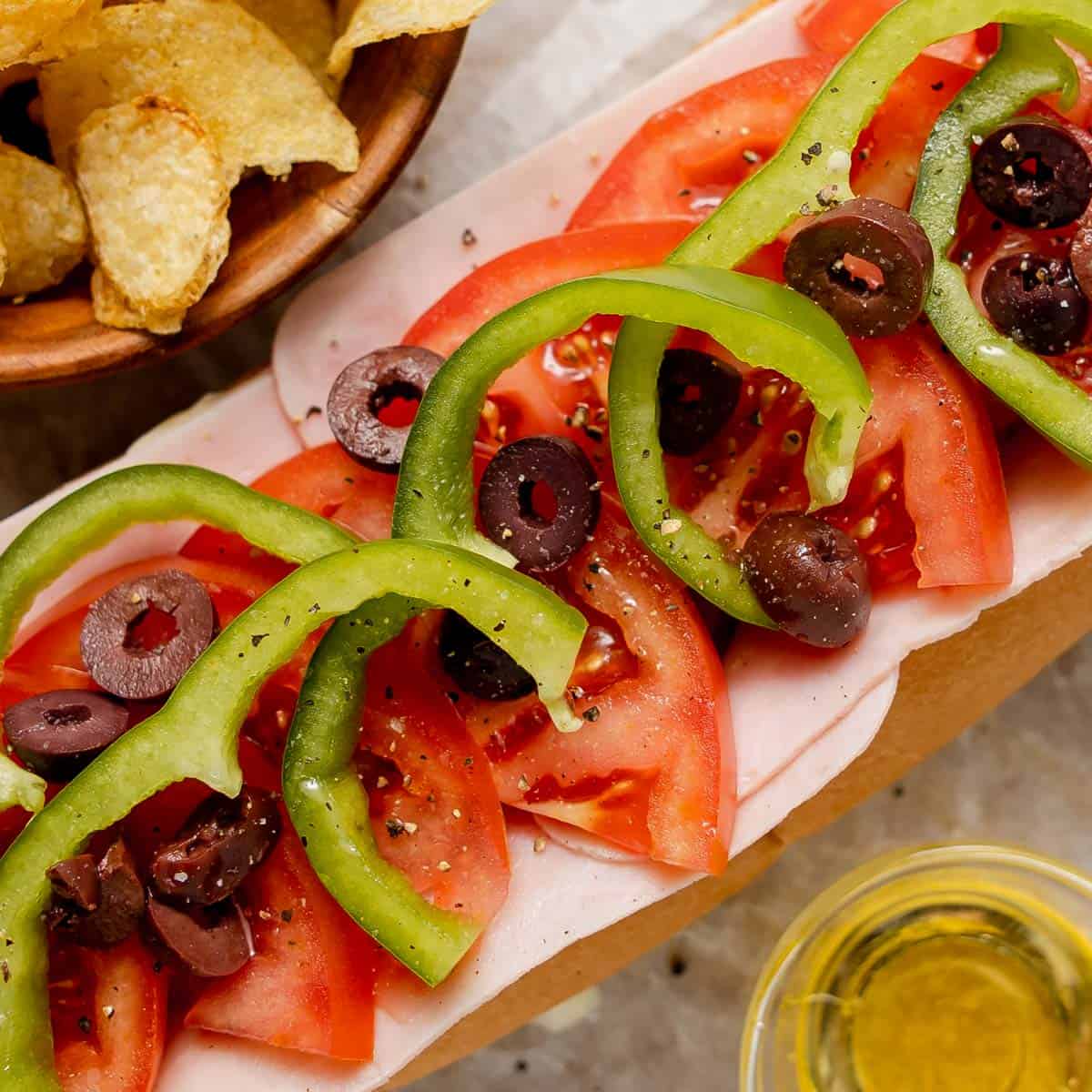
Finish with a light drizzle of oil, then sprinkle salt and pepper over the top. Enjoy immediately or wrap in parchment for transport.
Tip for slicing: This is not mandatory, but it makes life easier. Wrap the sandwich tightly in parchment and then slice the wrapped sandwich in half. That’s what Amato’s does, and I find it keeps all the veggies from sliding out of place while you’re cutting.
Tips
- Slicing the veggies thin matters. Thin slices make the sandwich easier to eat and easier to roll up.
- Make sure to keep the bottom of the sub roll intact, slicing through the top only 3/4 of the way. That will let you layer in the meat, cheese, and veggies, while keeping it portable.
- Do not toast the roll or melt the cheese. A Maine Italian is a cold sandwich.
Make It Ahead (And Take It To The Beach)
This is how I pack these Italians for traveling. I build the sandwiches in the morning, wrap them up tight, and pack them for the beach or a picnic. By the time I’m hungry, they’ve had a few hours to come together and they’re perfect.
You can make these Italian sandwiches up to a day ahead. Keep them wrapped in the fridge, and let them come up to room temperature before eating.
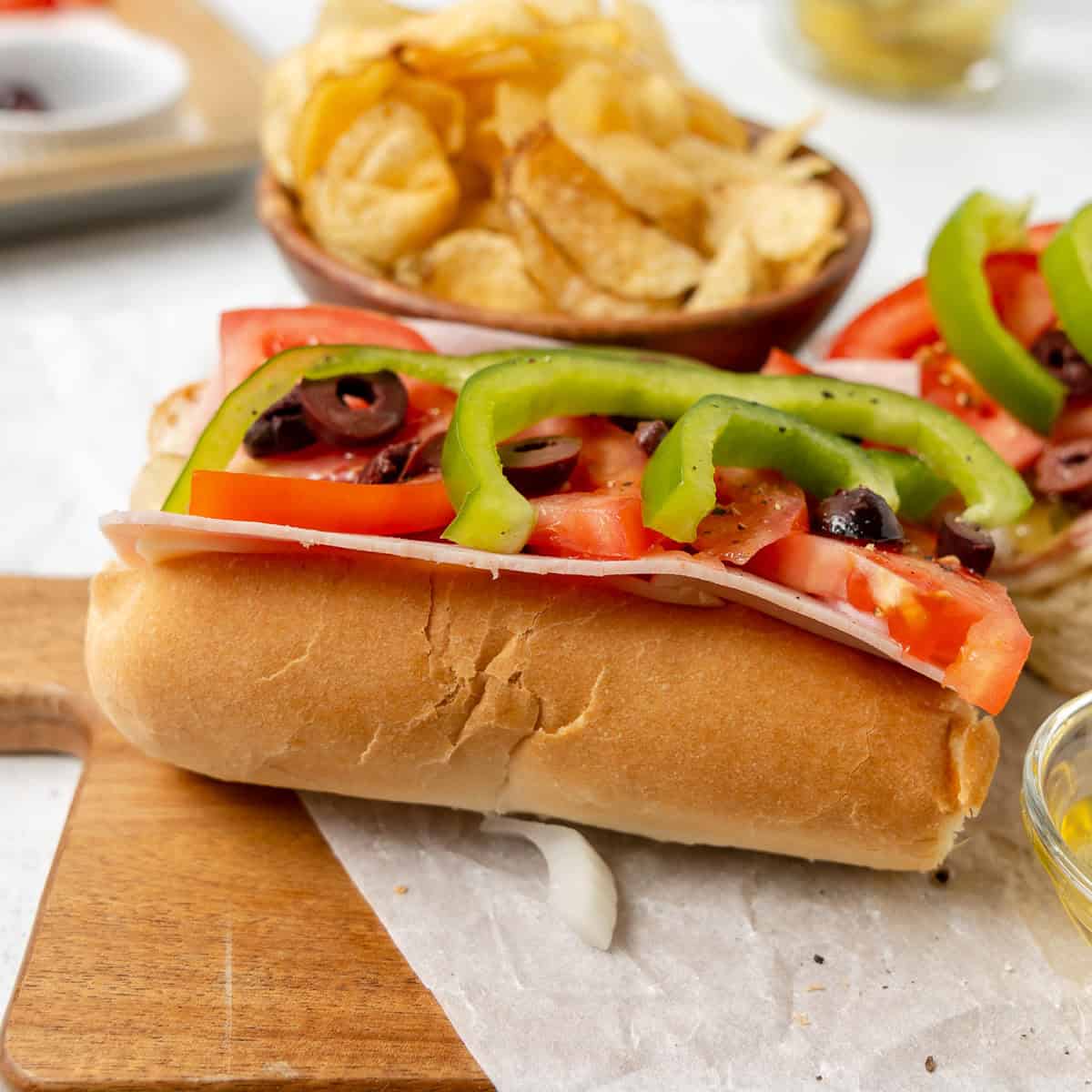
Serve with kettle chips, (Cape Cod chips preferably), and a big chocolate chip cookie or chocolate whoopie pie. That’s the perfect Maine lunch right there.
Variations
The classic Maine Italian is a ham sandwich, plain and simple. But if you wanted to customize it here are some ideas to make it your own:
- If you want more meat, add salami, Capicola, or mortadella and it becomes an Italian cold cut sandwich, which is its own thing, rather than the original Italian. Both are fantastic, just different sandwiches.
- You can make a Veggie Italian by leaving out the ham and keeping everything else. The cheese, veggies, pickles, olives, and oil carry it just fine.
- On cheese: the traditional Italian is made with American cheese, I personally swap in provolone or Swiss whenever I order my Italians. Use your favorite cheese if you’re not an American cheese fan.
If you’re into Maine’s classic handheld sandwiches, don’t stop here. My Authentic Maine Lobster Rolls are the other sandwich every Mainer grows up on, and if you want something sweet, my Fluffernutter Sandwich is a New England lunchbox staple that’s just as nostalgic as this one.
FAQs
It’s named for the man who created it, not the ingredients. Giovanni Amato named his sandwiches “Italians” in honor of his homeland and the Italian community in Portland.
No. Italian subs, the kind you find in New York, New Jersey, or at national chains, are stacked with cured meats like salami and Capicola, lettuce, provolone, and usually vinegar or Italian dressing. It’s also not a grinder, which is toasted and served hot. A Maine Italian is soft, cold, and built with boiled ham (or Polish ham) and sliced veggies, salt, pepper, and oil. Same name, different sandwich.
Look for a long, soft sub roll, usually found in the bakery section at the grocery store. You don’t want a crusty baguette or a hot dog roll. If you can find New England style rolls near you (like Botto’s) even better.
More Sandwich Recipes


Save This Recipe
Just enter your email below and we will send this recipe right to your inbox, plus we will send more yummy recipes and ideas.
Maine Italian Sandwich
Ingredients
- 1 soft bakery sub roll, 10-12 inches in size
- 2 large slices of cooked or Polish ham, (these are the large rectangular slices of ham at the deli)
- 3 slices white American cheese
- 2 tablespoons white onion, diced
- 6-8 red tomato slices, (about 1/2 a medium tomato) sliced thin into half moons
- 6-8 strips of green pepper, thinly sliced
- 5 slices of sour pickle, sliced thin on the bias, for long slices
- Sliced Greek olives
- Light olive oil or salad oil, for drizzling
- Salt and ground black pepper
Instructions
- Slice the roll from the top, about 3/4 of the way down, without cutting all the way through. You'll end up with a flat bottom and a hinge rather than two separate halves. Do not toast the bread.
- Lay the cheese in first, right against the bread in an even layer. Then layer the ham on top of the cheese.
- Add the onions, pickles, tomatoes, green peppers, in that order. Then sprinkle on the sliced Greek olives.
- Drizzle with a light layer of oil and finish with a sprinkle of salt and black pepper.
- Enjoy your Italian immediately or wrap it tightly and pack it up for a picnic or for lunch on the go. *See notes about cutting and make-ahead tips.
Notes
- If you want to cut the sandwich in half, I recommend wrapping it in parchment paper and cutting the sandwich in half through the parchment. That’s what Amato’s does and it keeps all the veggies in place.
- Sandwiches can be made one day ahead. Wrap tightly in foil or parchment and store in the fridge. For best results, bring the Italian up to room temperature before eating.



Hi Michelle,
My compliments to you on your detail about the ham, cheese, and olives on the Italian Sandwich recipe. Very important distinctions. I grew up just north of Portland and now live in Washington state. Over the years, I’ve tried to recreate the recipe. I’m still working on narrowing down the best brand of cheese. Believe it or not, few stores carry white American cheese, so I have to settle for the brand they sell. Pickles and bread: those are my top challenges. It’s easier to have the pickles shipped in from Maine. With the supplier of Amato’s flour, King Arthur Baking Company, not all that far from me, I would have expected some version of their bread nearby. I’ve not found anything that comes close in all of Washington or Oregon — and I’ve been looking since 1991. I don’t suppose you have a recipe for Amato’s bread that you’d be willing to share, would you?
Thanks
Thank you so much for your kind words! I hear you on the pickles and bread! I do have to go to Amato’s specifically for the pickles, since I’ve never found an alternative brand quite as zesty. But the bread…that’s the tricky part. Unfortunately, I don’t have a good recipe for their rolls, and I even went into Amatos, and they had no rolls for me to spare. However, if you can find Botto’s Bakery sub rolls (they are another Maine company, but loves wholesale supply), you might be able to get those shipped? Other than that, the rolls are a unicorn. I will say… if you find a sub roll recipe that you love, make sure to add some milk powder to the dough. That’s been my secret ingredient to making rolls extra soft and fluffy. You might have to Frankenstein your favorite recipe with the addition of the milk powder! Thank you for reaching out!