Old-Fashioned Anadama Bread


This post may contain affiliate links, see my disclosure policy for details.
Anadama bread is a classic New England loaf made with cornmeal and molasses, known for its subtle sweet flavor and nostalgic, though questionable, roots. This modernized version keeps the tradition alive while delivering a lighter, softer texture that’s perfect for toast, sandwiches, and everyday lunches.
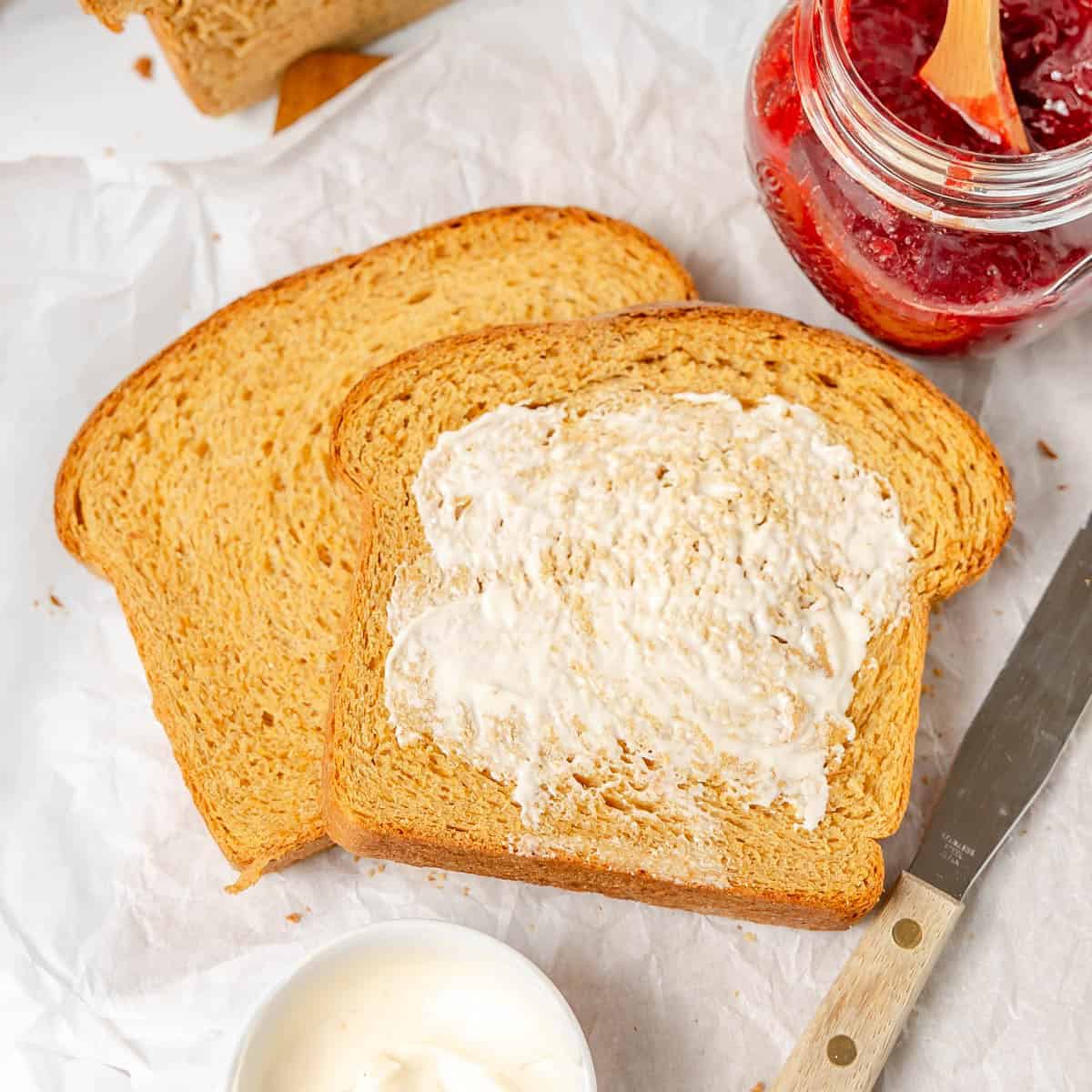
New England is home to more than a few legendary and beloved kitchen “accidents.” I’d say my top three faves are Parker House Rolls, the famously improvised Chocolate Chip Cookies created at the Toll House Inn, and perhaps most curiously, Anadama bread. A classic New England loaf known for its signature blend of cornmeal and molasses, it holds a deeply nostalgic place in New England kitchens. Whether their exact origins are rooted in fact or folklore, these recipes share a common thread: simple ingredients, a little ingenuity, and something worth making and sharing.
After years of making this molasses bread recipe when I worked in a bakery, and countless rounds of testing at home, I’ve refined a more practical, modern version that stays true to its classic roots while delivering a lighter, softer texture. With minimal hands-on time and a process that’s largely handled by a stand mixer, this is a foolproof, everyday bread loaf that works just as well for toast as it does for sandwiches or with soups and, most importantly, brings this regional, classic favorite into the modern kitchen.
Why You’ll Love this Anadama Bread Recipe
- A New England staple. It’s not known everywhere, but it’s a nostalgic and truly loved New England recipe.
- It’s very versatile! Use it for everything from toast to sandwich bread and more!
- It doesn’t have long rising times like other breads. Just a 30 minute rest and then a final proof before baking.
- Fool proof recipe that’s mostly hands off and almost entirely made in a stand mixer. Great for beginner bakers.
What is Anadama Bread?
I was first introduced to Anadama bread when I worked at a bakery, where it was a favorite among locals. It’s one of those classic New England breads you don’t see as often outside the region, and that makes it feel a little special. What makes this bread unique is the addition of molasses and cornmeal, ingredients you’ll find in other old-fashioned New England recipes like brown bread in a can or homemade baked beans.
I know, this is the part everyone complains about in food blogs, but hear me out, this bread comes with lore!
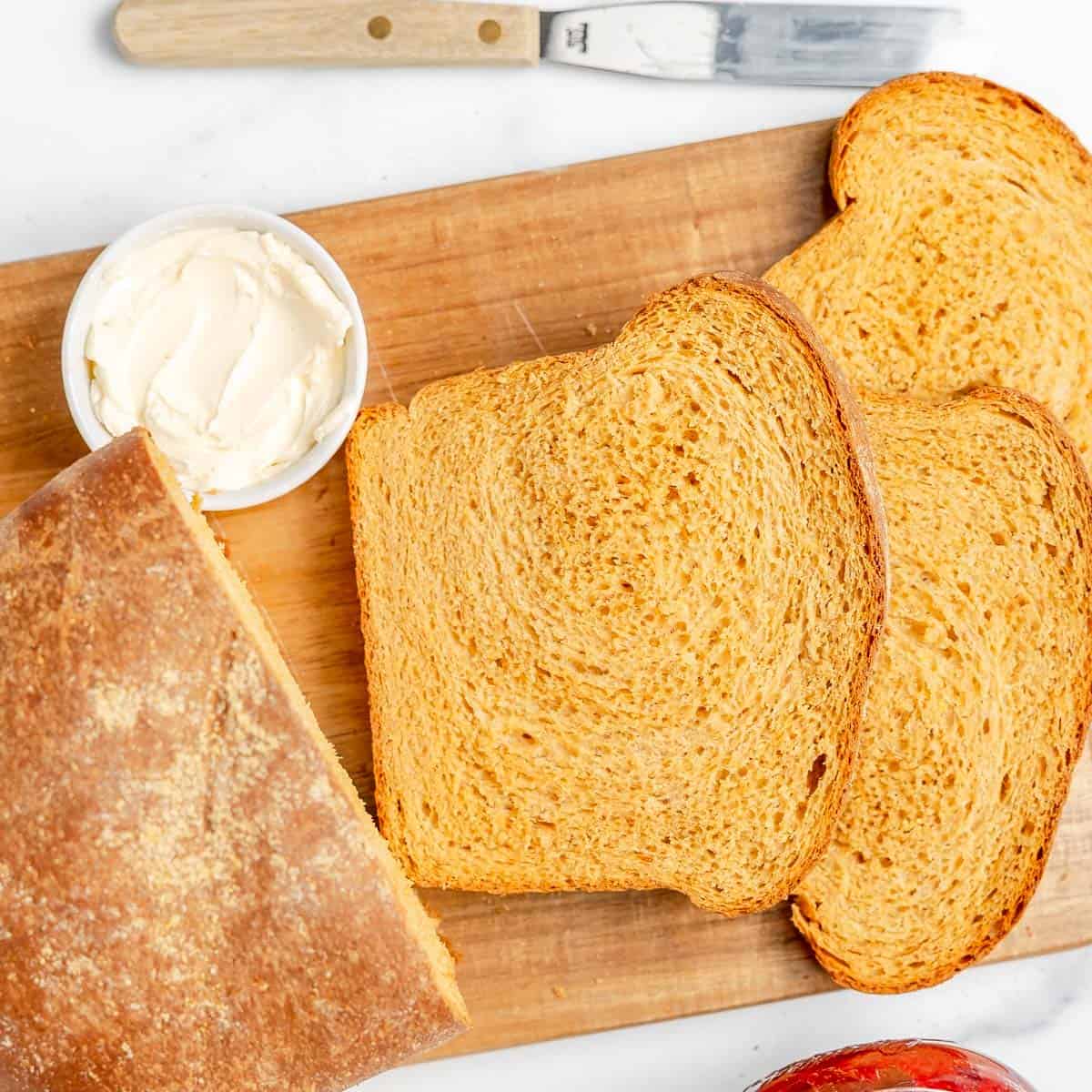
The legend has it that there was a fisherman from Massachusetts who wasn’t happy with his wife Anna’s cooking and had grown tired of yet another bowl of cornmeal porridge. He either threw his porridge into her bread starter (thinking it was the trash) or he added yeast and flour to the mush and baked it himself. Either way, it created the bread, and in frustration, he exclaimed, “Anna, Damn Her!”
But if you know anything about a New England accent, we do not pronounce ‘r’s up here. So it came out sounding like “Anna, dam’a!”, and hence, Anadama. Whether that’s true or not, who’s to say? But we ended up with a bread that is sweet, delicious, and uniquely New England, and Anna’s getting the last laugh.
Anadama Bread Recipe Ingredients
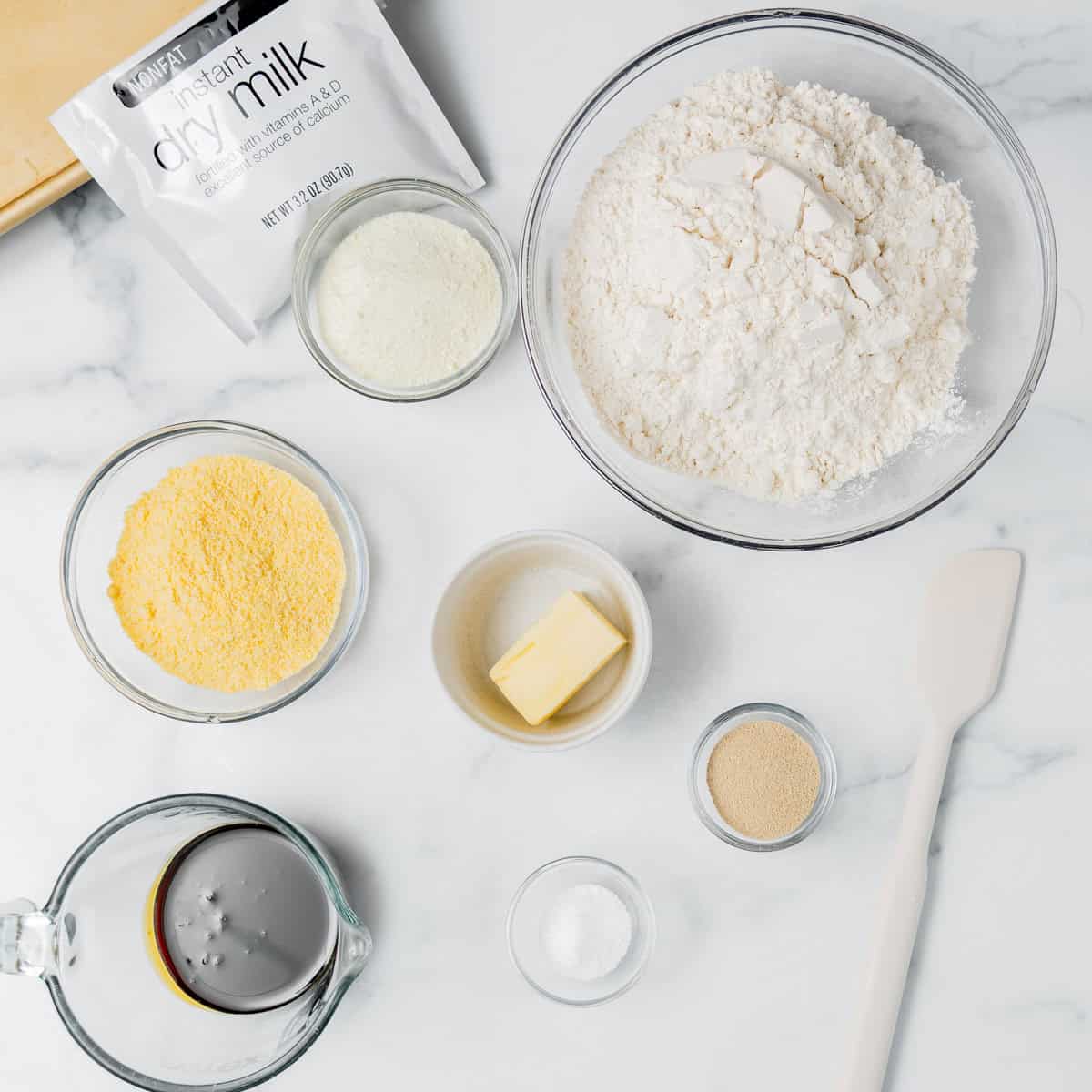
- All purpose flour– I prefer all purpose in this recipe to keep the bread nice and soft.
- Yellow cornmeal – Cornmeal is strictly for the authenticity of the recipe. The cornmeal I use is sometimes labeled “medium grind” or stone ground, or not specified at all. I avoid masa, “finely ground” cornmeal, or corn flour. You want the same cornmeal that’s used for cornbread.
- Nonfat dry milk powder – This is the secret ingredient for very soft, fluffy bread, that rises high. The protein in the milk powder strengthens the structure of the bread, allowing it to rise tall and hold its shape. Recipe note: Don’t be tempted to use regular milk instead. It won’t work the same, and I found during testing that milk wipes out the flavor of the molasses.
- Coarse Kosher salt
- Molasses – I like to use the “fancy” dark molasses. But any molasses that’s not blackstrap will do.
- Dry Instant yeast – This is also bread machine yeast. This yeast can be added to the dry ingredients and does not require blooming. Make sure to read the labels on your yeast packet to know which kind you have. Active dry yeast can be used, but it will need to be “bloomed” first. Meaning you’ll need to add it to the water and molasses, then let it sit for 5 minutes before adding it to your bread.
- Lukewarm water – The water should be warm before using, so the bread can start rising quickly. Do not use water any hotter than 110°F to be on the safe side. When water is at 120°F or higher, it will kill the yeast.
- Unsalted butter – melted
How to Make Anadama Bread
This is a shortened overview of the full instructions found in the recipe card at the bottom of the post.
Step 1
Activate the dry yeast (if needed) and set up your stand mixer with the dough hook attachment.
Important: Read your yeast packet or container to find out which type of yeast you have, and either add it to warm water and molasses and let it bloom for 5-7 minutes, or, if you’re using instant or bread machine yeast, add it directly to the dry ingredients.
Step 2
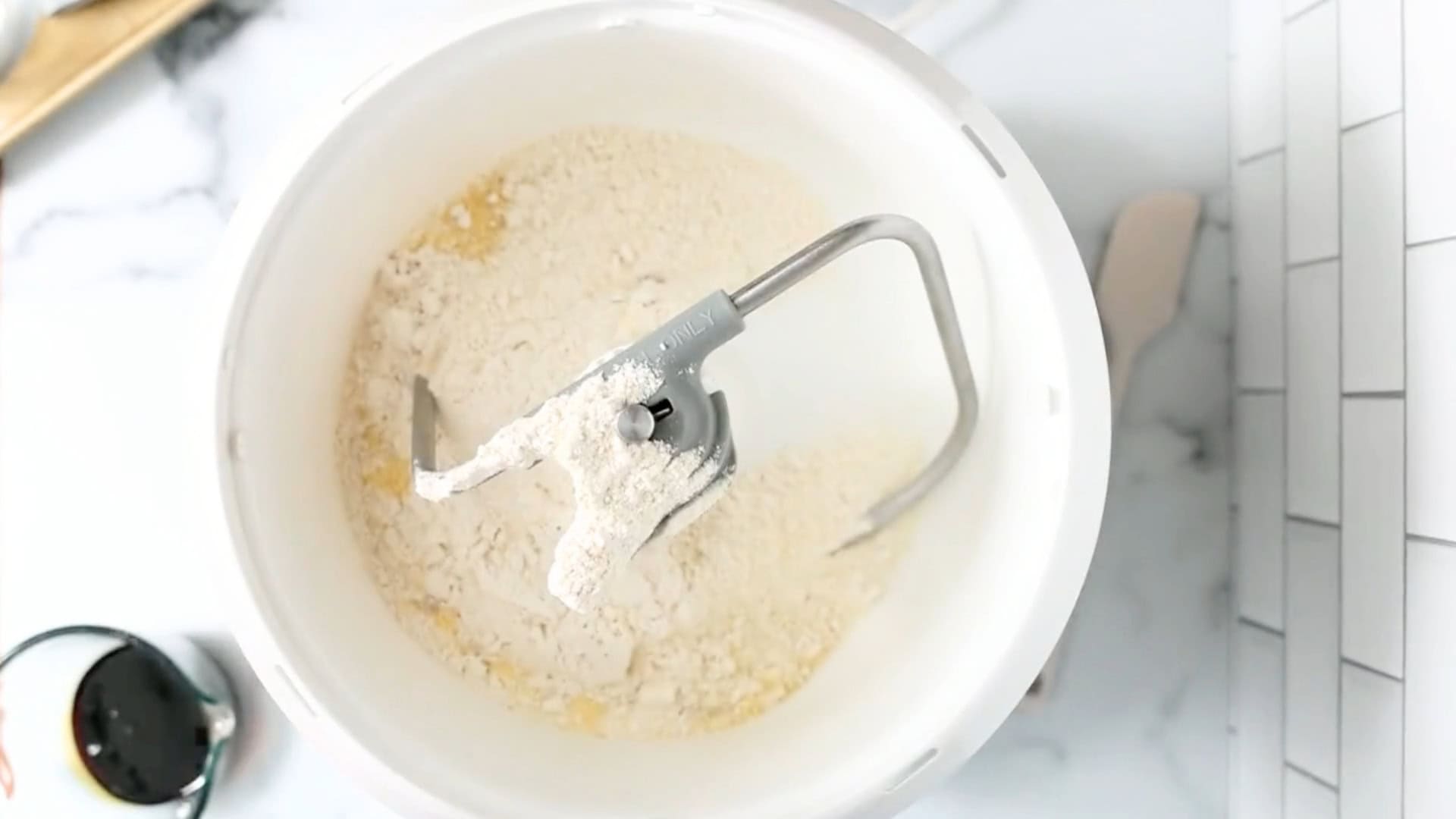
Combine the dry ingredients in the bowl of a stand mixer.
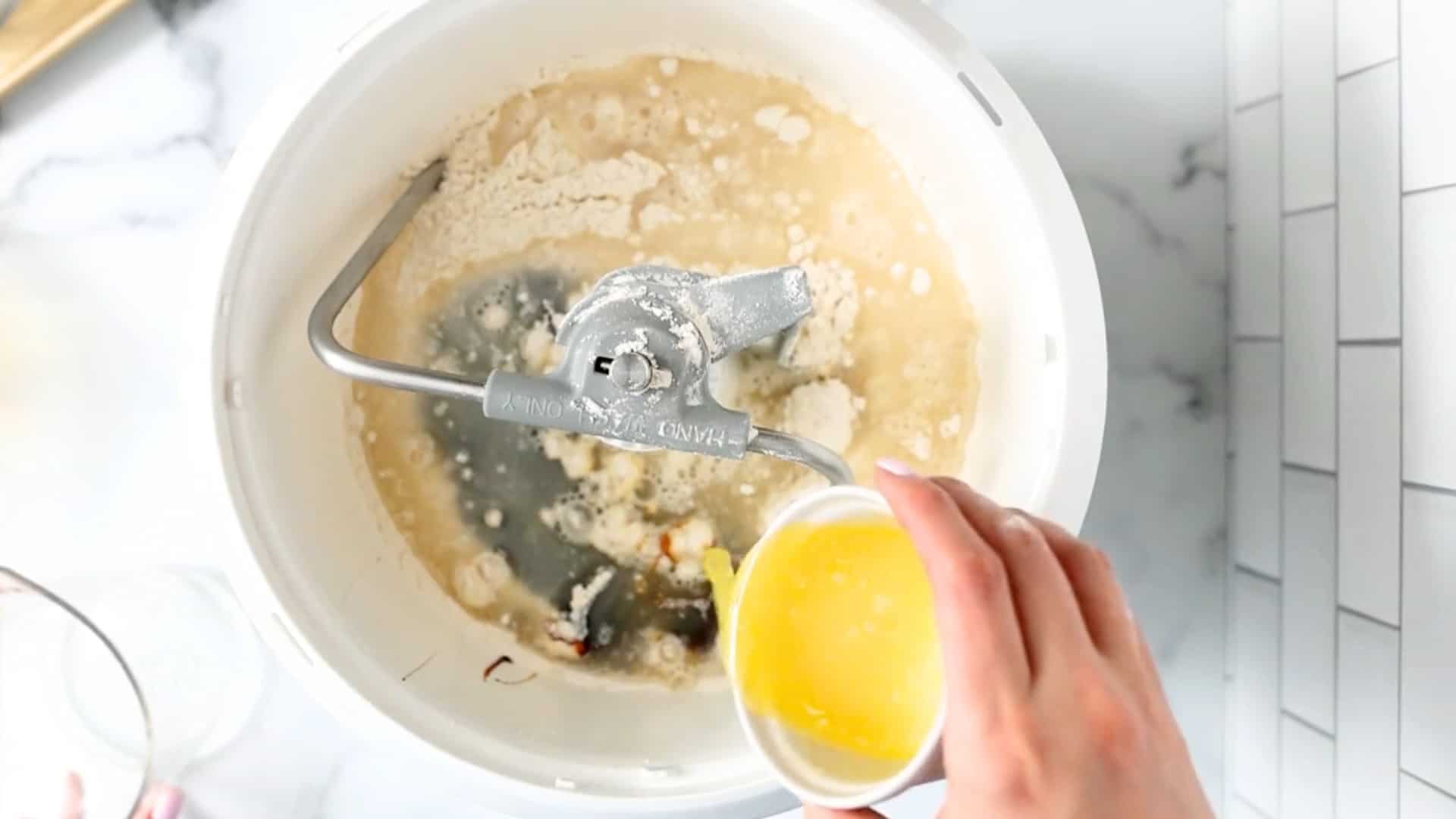
Add the wet ingredients (including the bloomed yeast, if that’s what you’re using) and mix on low speed for about a minute, just until combined.
Turn the mixer to medium-low speed and mix for 10 minutes. The dough should look smooth, pull away from the sides of the bowl, and pass the windowpane test:
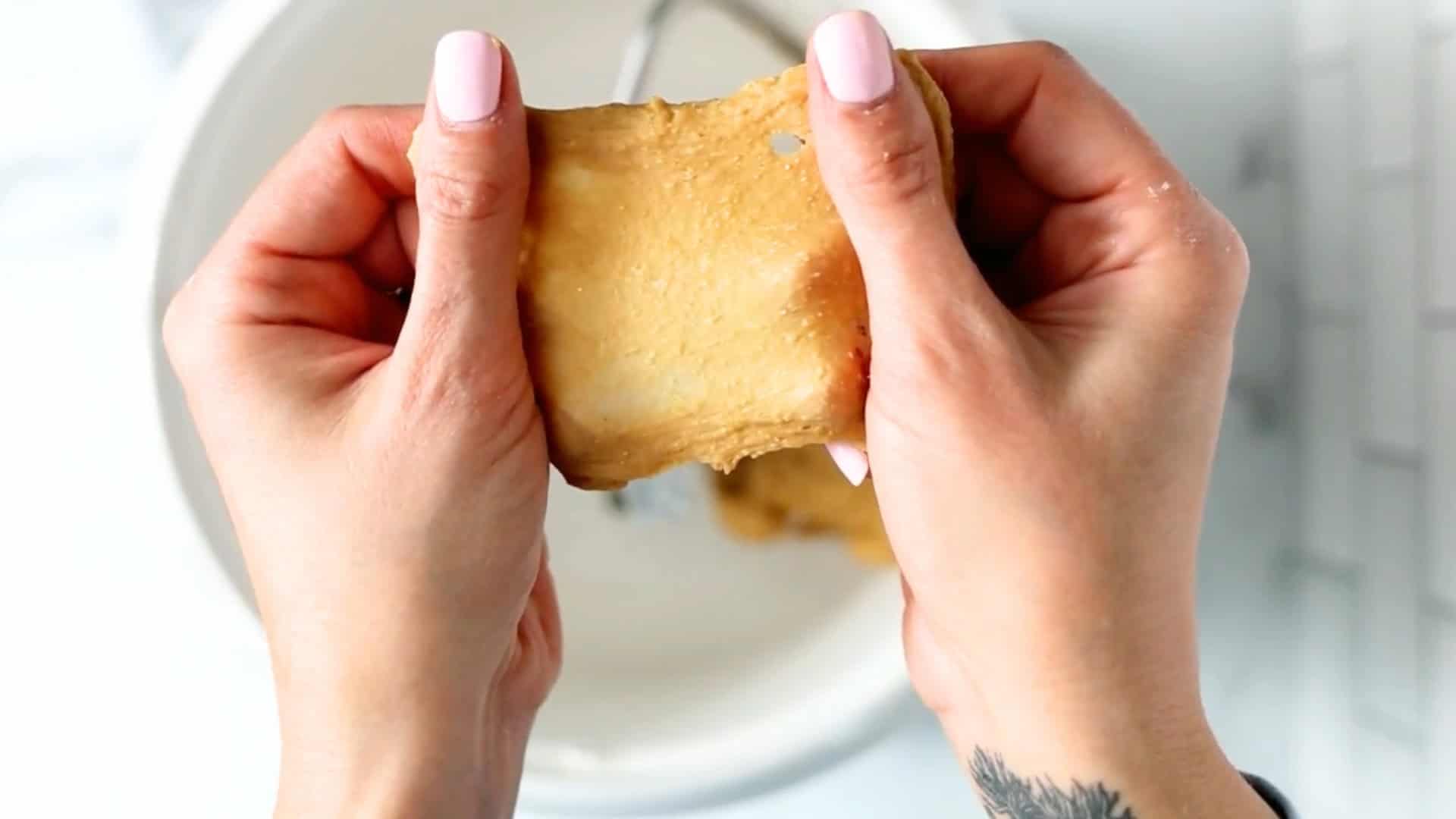
Windowpane Test: Hold up a chunk of dough to the light and stretch it. If you can stretch it thin enough to see light pass through without breaking, the dough is ready.
Step 3
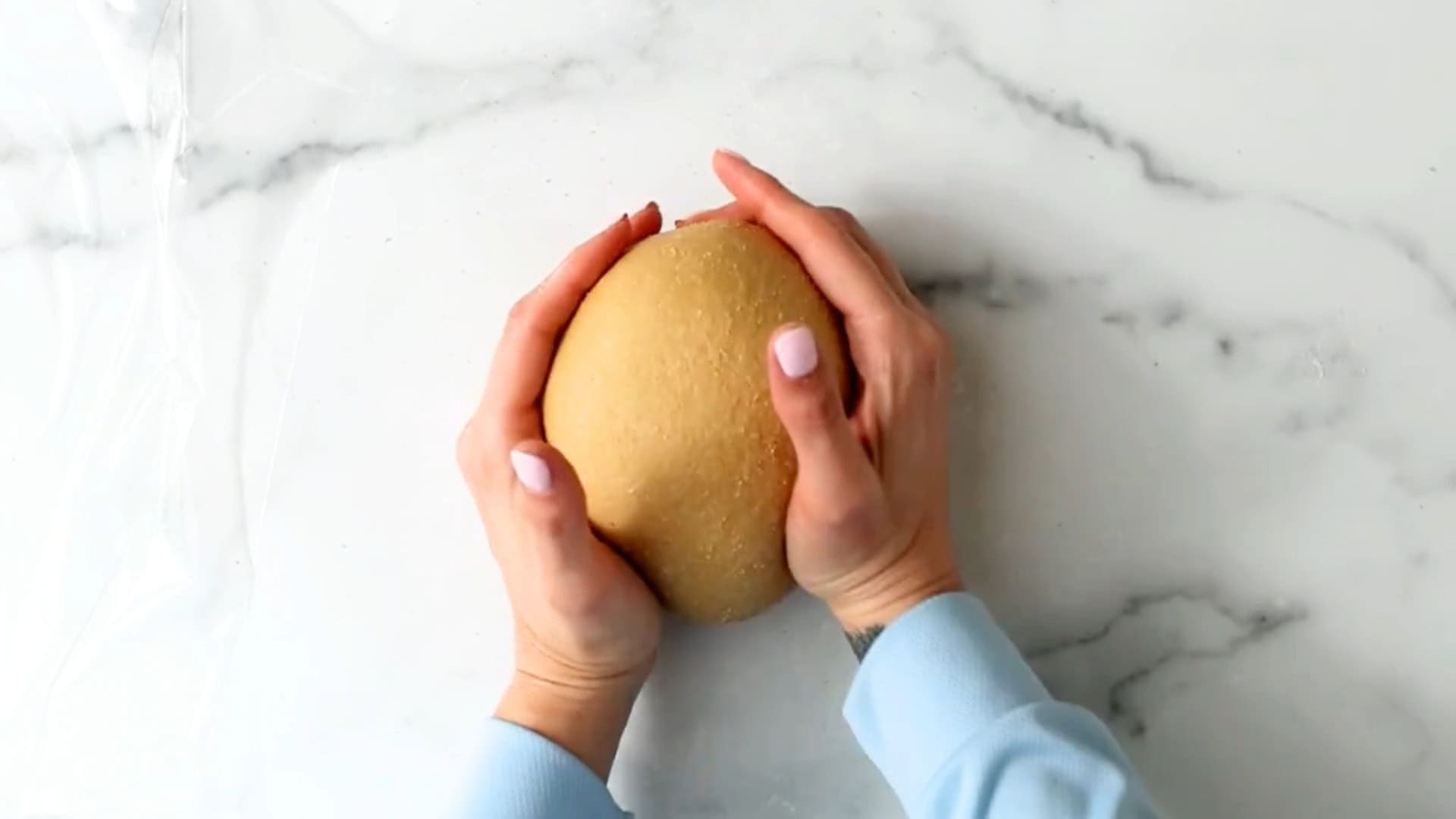
Shape the dough into a smooth ball and add it back to the mixing bowl. Cover with plastic wrap and let the dough rest for 30 minutes.
Step 4
Grease a 9×5-inch loaf pan and set aside.
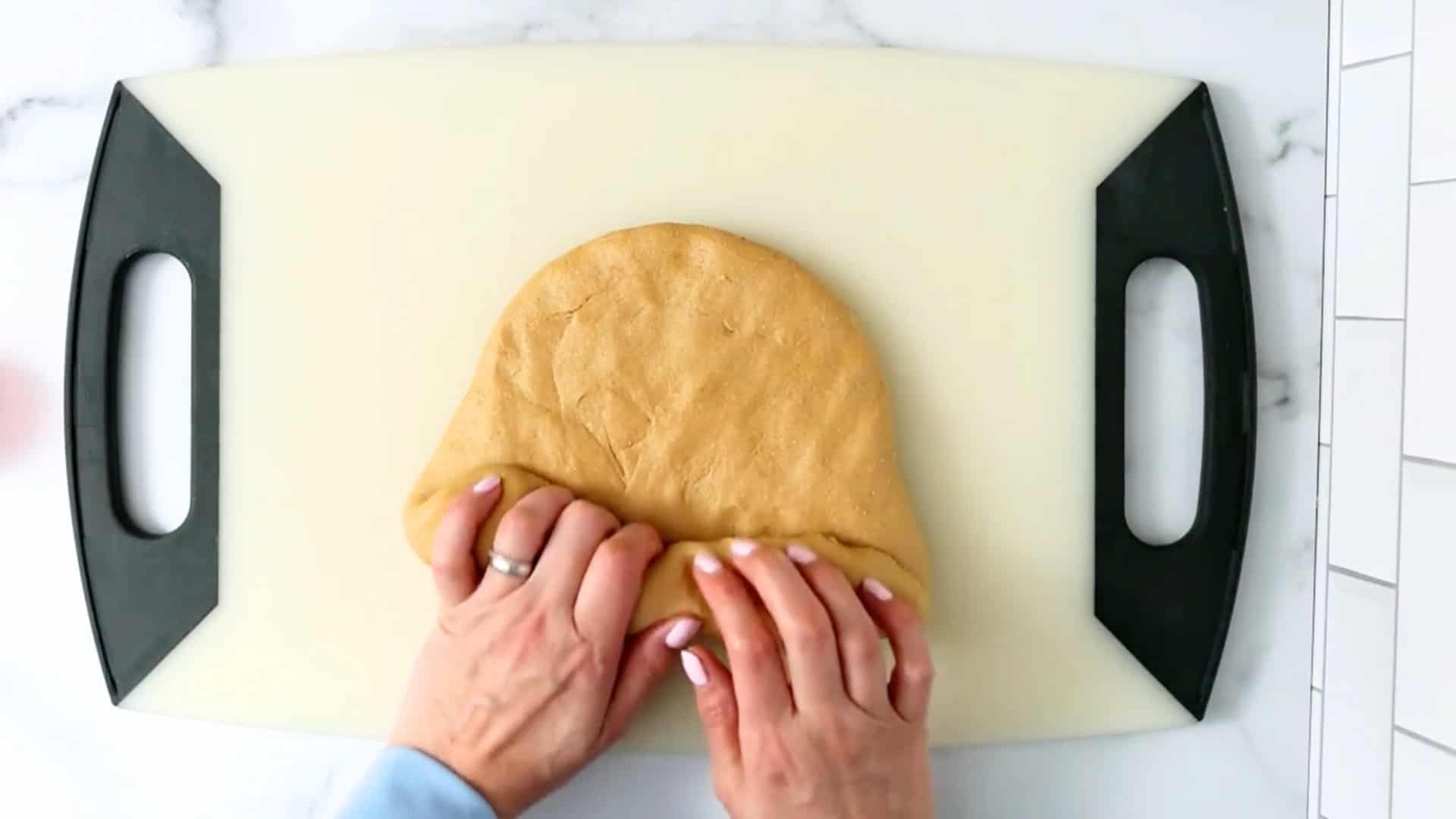
Turn the dough out onto a lightly floured surface and press it into a rectangle about as wide as your loaf pan (9″). Roll it up tightly into a log, pinching the ends, and place it seam-side down in the pan.
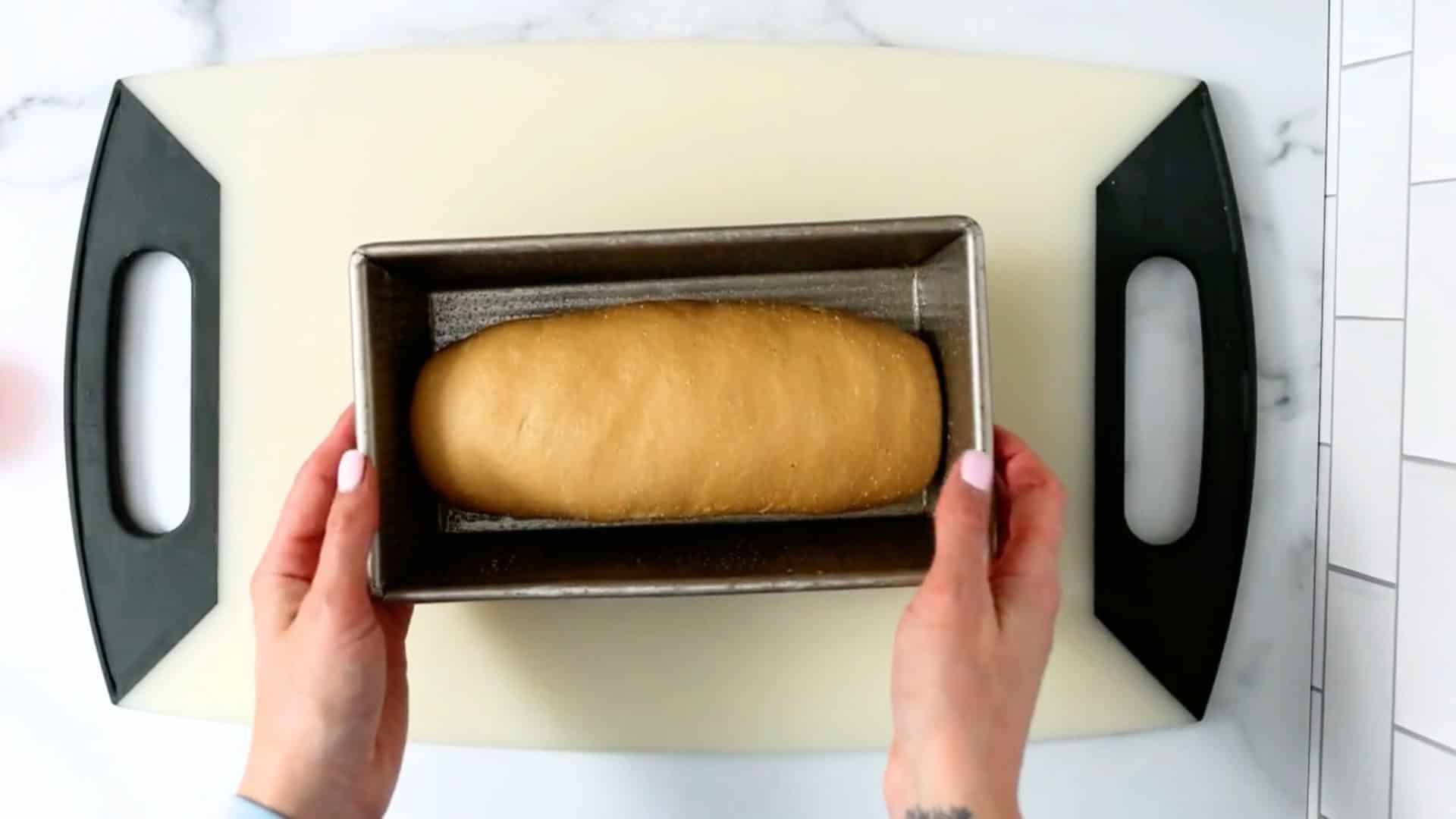
Loosely cover the pan with plastic wrap sprayed with cooking spray.
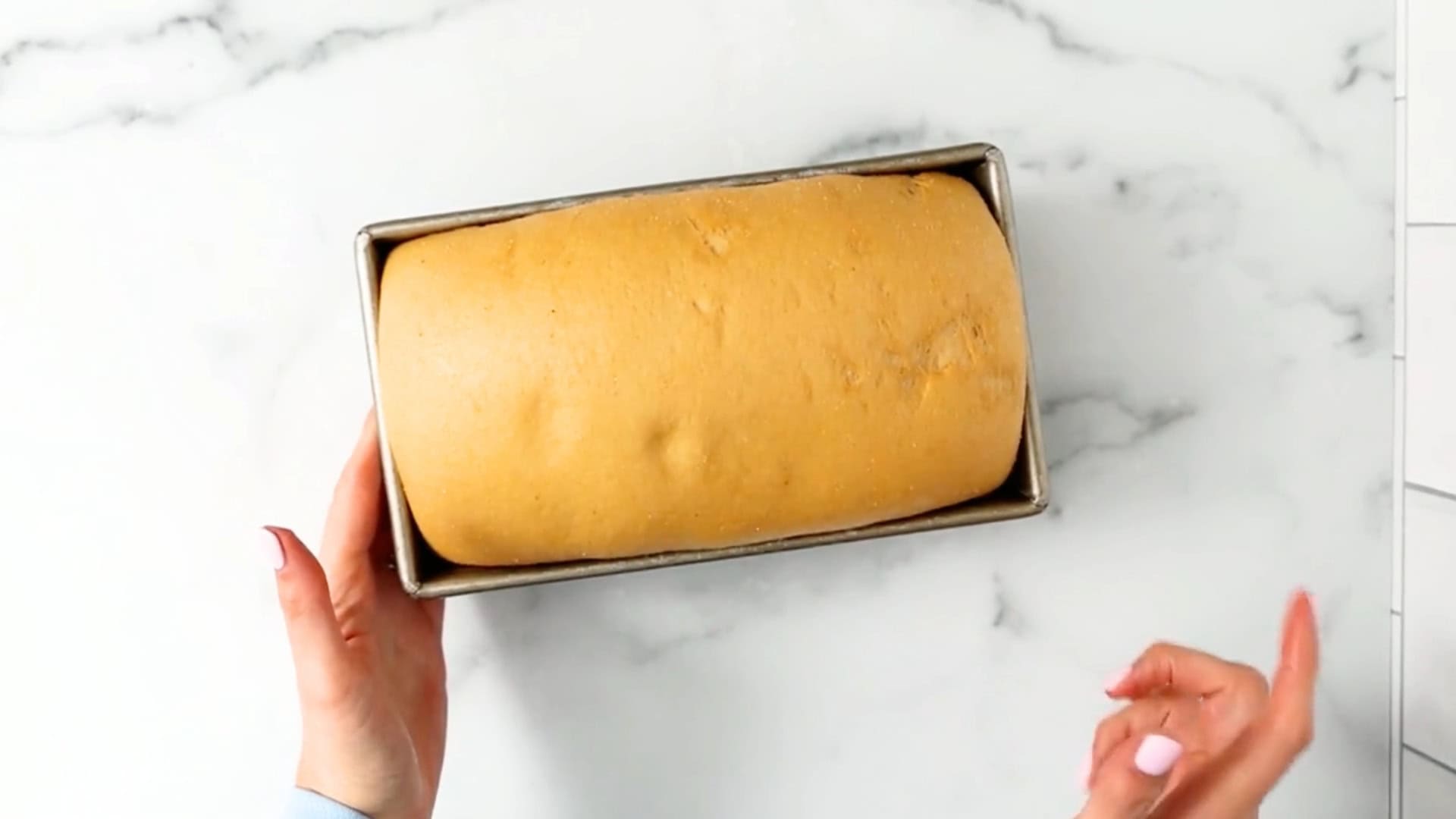
Let the dough rise in a warm spot until doubled in size (about 1 1/2 hours). You’ll know the dough is ready when you gently press it with a finger and the dent remains.
While the dough is rising, and 30 minutes before baking, preheat the oven to 350°F.
Step 5
Once proofed, bake the anadama bread at 350°F for 30–35 minutes, until the bread is browned and risen and a thermometer inserted into the center reads 190°F.
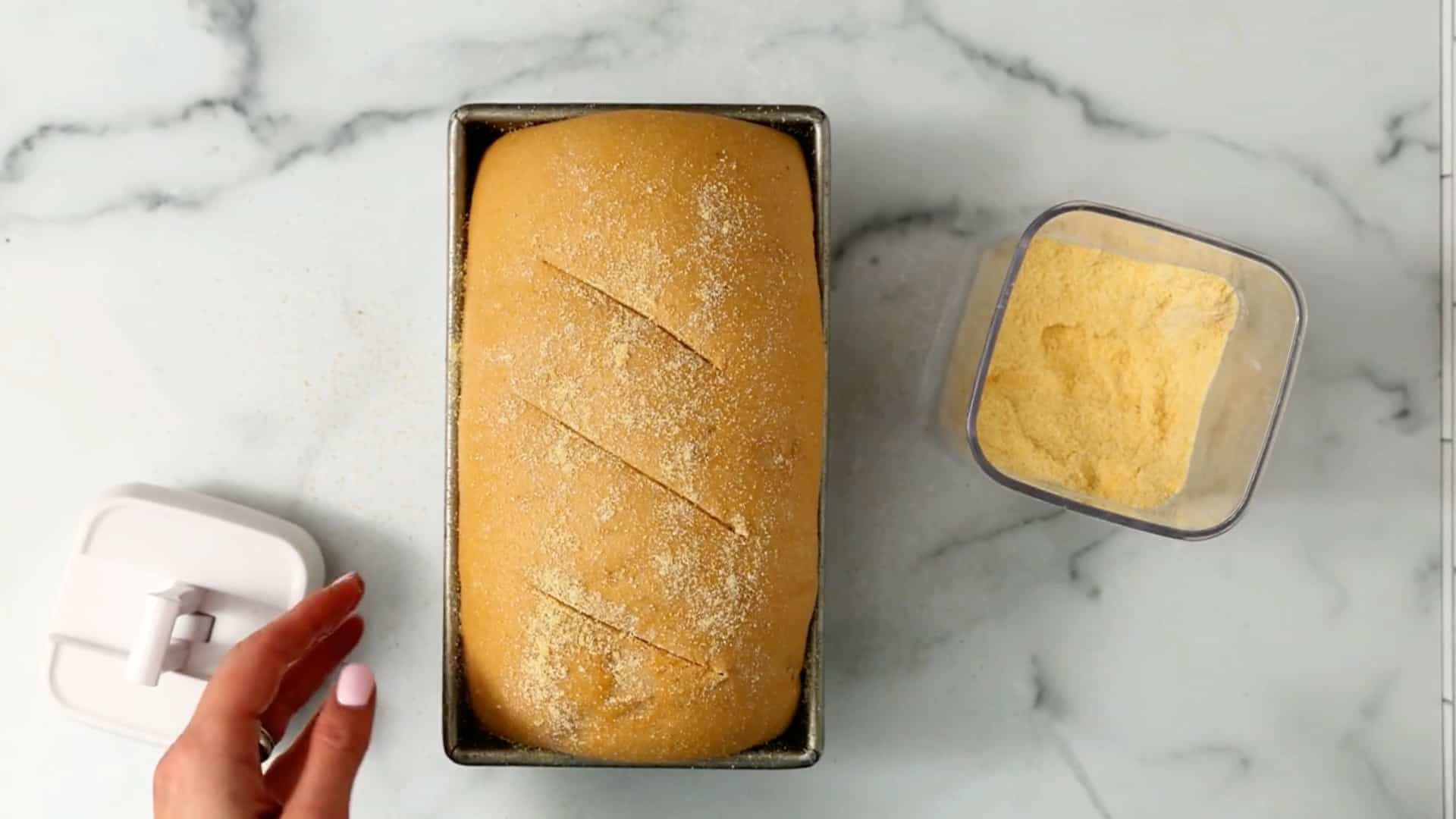
Decorating Tip: After rising, but before baking, sprinkle the top of the loaf with cornmeal and use a sharp knife to slice in a design. It’s an easy way to give your bread that classic bakery look.
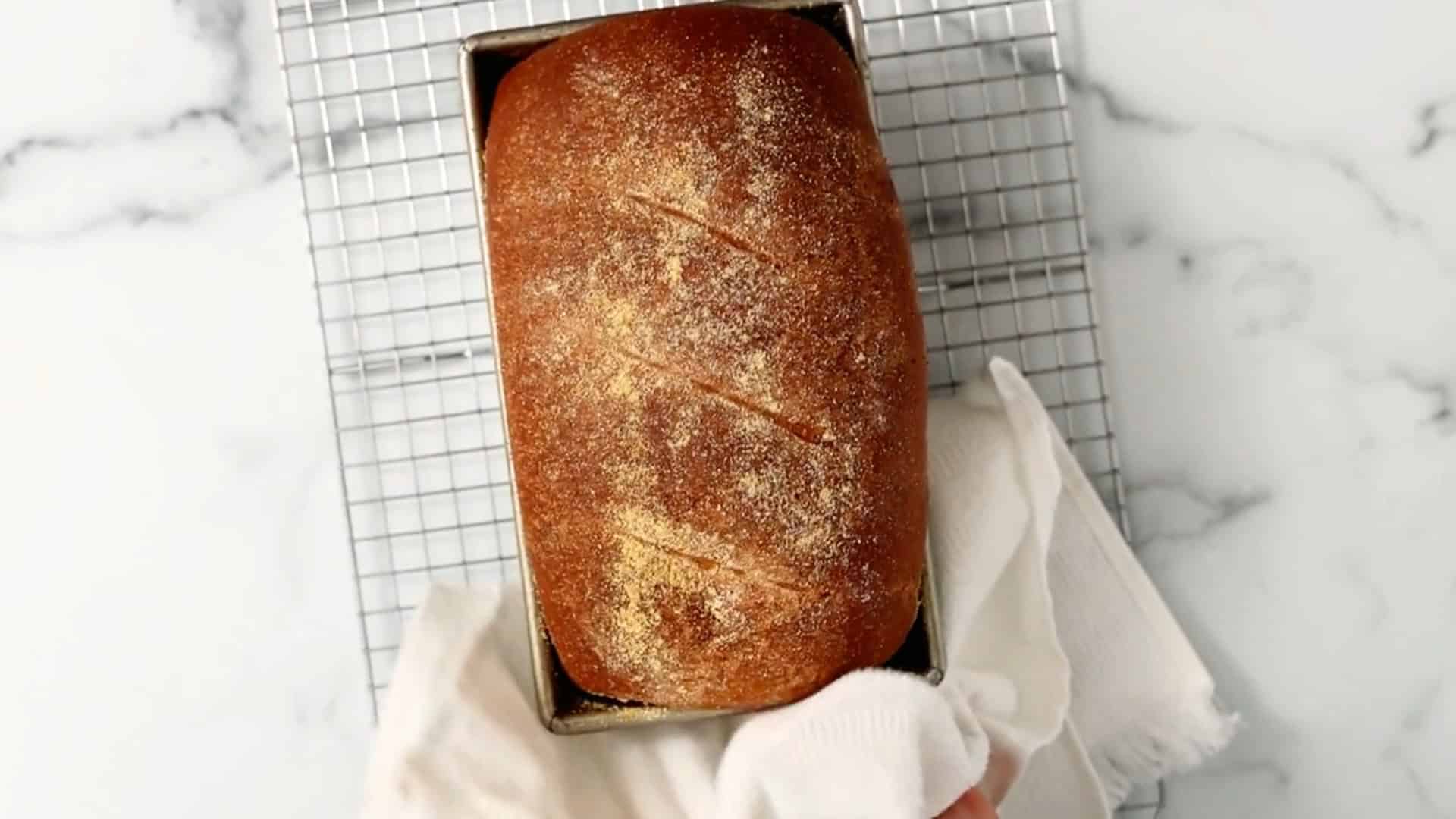
After baking, remove the bread from the pan right away and place it on a wire rack. This keeps the bottom from getting soggy as it cools. Wait until the loaf has cooled completely before slicing.
Tips & Tricks
- Dry milk powder is not make or break for this recipe, but it does help the loaf rise higher and have a fluffier texture. But if you don’t want to buy a whole box for this one recipe, that’s totally fine, just leave it out!
- The amount of flour your bread dough needs can vary depending on the moisture in the air. During the winter, when the air is very dry, I usually don’t need to add any extra flour. But in the summer, the humidity can make the dough stickier, so it may need an extra tablespoon or two of flour to help it pull away from the sides of the bowl.
- I don’t recommend replacing the water in this recipe with milk. It mutes the molasses flavor and doesn’t make the loaf as fluffy.
What To Eat With Anadama Bread
One of the great things about this bread is how versatile it is. From soups, salads, breakfast, lunch, or dinner, you won’t run out of ways to enjoy it!
- Serve with soups and chowders like Vegetarian Minestrone, Chicken Corn Chowder, Broccoli Cheddar Soup, and Fish Chowder
- The flavor goes great with salads like Apple Walnut Salad or Strawberry Feta Salad
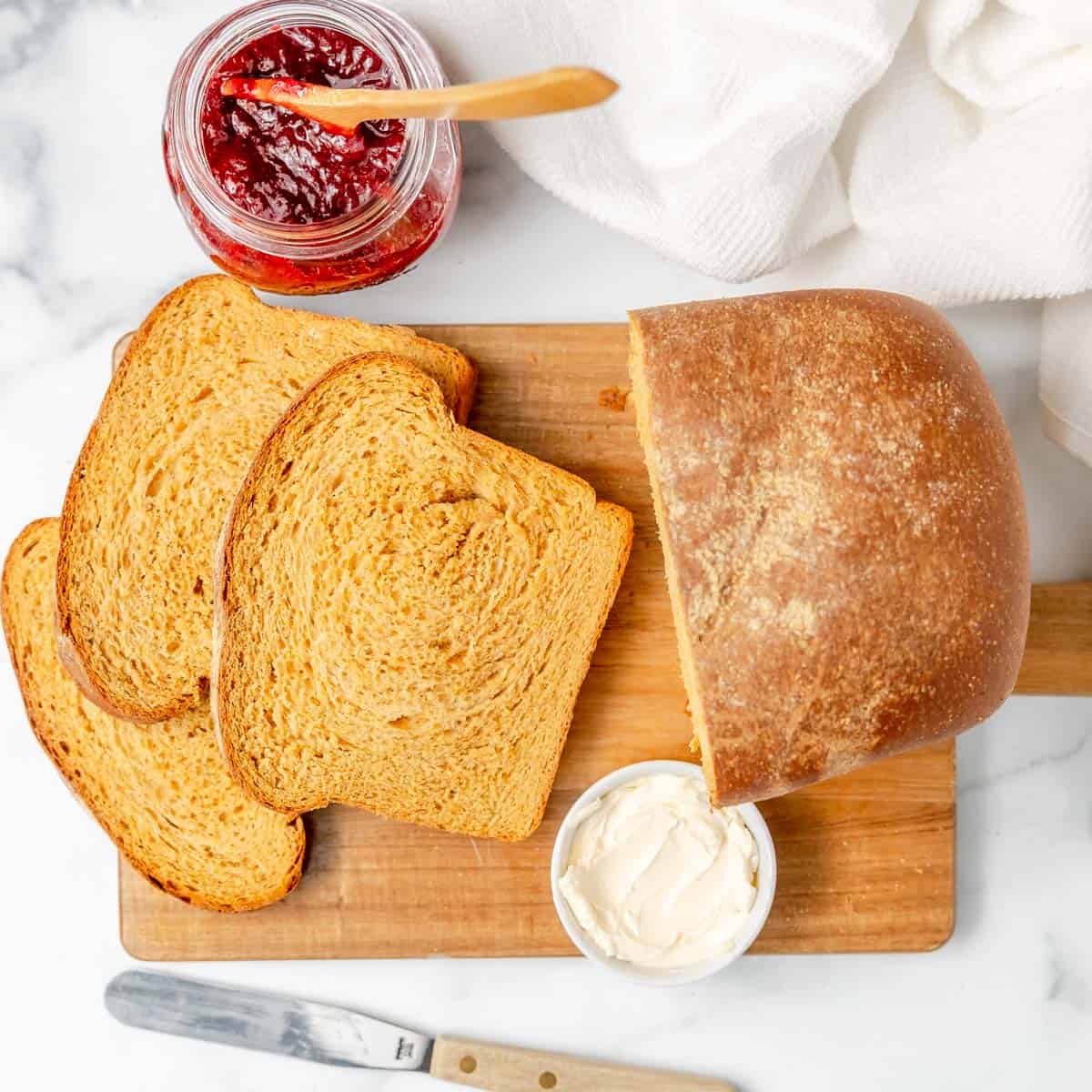
- Slice and toast for breakfast. Top with Whipped Honey Butter, Strawberry Jam, Mixed Berry Jam, or Homemade Apple Butter
- Make into sandwiches. Fill with Chicken Salad, make a Fluffernutter or Homemade Uncrustable, or a Grilled Cheese Sandwich (I recommend adding baked ham and Swiss).
How to Store Anadama Bread
Store your Anadama loaf in an airtight container at room temperature for up to 7 days.
Freezing instructions: Double wrap your loaf in plastic wrap and then a layer of foil to prevent freezer burn. Store in the freezer for up to 3 months.
More Classic New England Recipes
- New England Clam Chowder
- Maine Lobster Rolls
- New England Fish Chowder
- Classic Whoopie Pies
- Downeast Maine Pumpkin Bread
- Boston Baked Beans (With Bacon)
Save This Recipe
Just enter your email below and we will send this recipe right to your inbox, plus we will send more yummy recipes and ideas.
New England Anadama Bread Recipe
Ingredients
- 3 cups (14.5 oz) all-purpose flour
- 1/2 cup (2.25 oz) yellow cornmeal
- 1/4 cup nonfat dry milk powder
- 1 1/2 teaspoons kosher salt
- 1/4 cup unsulphured molasses
- 2 1/4 teaspoons instant yeast, see instructions for details
- 1 cup lukewarm water
- 3 tablespoons unsalted butter, melted
Instructions
- Before starting, determine the type of yeast you have. If using active dry yeast: combine the water and molasses and sprinkle the yeast on top of the liquid. Let it bloom for 5 minutes until slightly foamy. If using instant (bread machine) yeast, you can skip this step and add it directly to the dry ingredients.
- In the bowl of a stand mixer fitted with a dough hook, combine the all purpose flour, cornmeal, dry milk powder, salt, and instant yeast (if using). Whisk to combine.
- To the dry ingredients, add the water and molasses mixture (with the bloomed active dry yeast, if using) and the melted butter. Mix on low speed for 1 minute, just until combined.
- Increase the speed to medium-low (speed 4 on a KitchenAid) and mix for 10 minutes. The dough should look smooth and begin to pull away from the sides and bottom of the bowl. To check if the dough is ready, do the windowpane test: stretch a small piece of dough between your fingers. If it stretches thin enough for light to pass through without tearing, it’s ready. If it tears, mix for another two minutes and test again.
- Once the dough has been kneaded, transfer to a lightly floured surface and knead a few times by hand to shape the dough into a smooth ball. Place the dough back in the bowl. and cover with plastic wrap. Let it rest for 30 minutes. It won't rise much, you're just relaxing the dough.
- Spray a 9×5-inch loaf pan with cooking spray and set aside. Once the dough has rested, move it onto a lightly floured surface and shape it into a rectangle roughly as wide (9") as the loaf pan. Roll the dough up tightly into a log, pinching the ends closed, and place the log seam-side down in the greased loaf pan.
- Loosely cover the bread with plastic wrap sprayed with cooking spray and let rise in a warm spot for about 1 1/2 hours, or until doubled in size. The dough is ready when you gently press it with your finger and the dent stays or slowly springs back.
- Once risen, you can add a pretty design by scoring the top with a sharp knife and sprinkling on extra cornmeal. Bake the anadama bread at 350°F for 30–35 minutes, until the bread has risen, browned, and the center of the bread reaches 190°F on an instant-read thermometer.
- Remove the bread from the pan right away and place it on a cooling rack to keep the bottom from getting soggy. Allow the bread to cool completely before slicing.